A long overdue recap of 2024

Whirlwind. That describes 2024. To keep things manageable as you scroll down, I’ve decided to offer a series of notes, photos, and slideshows by month. You might want to grab a cup of coffee or tea because it’s a long post!

January:

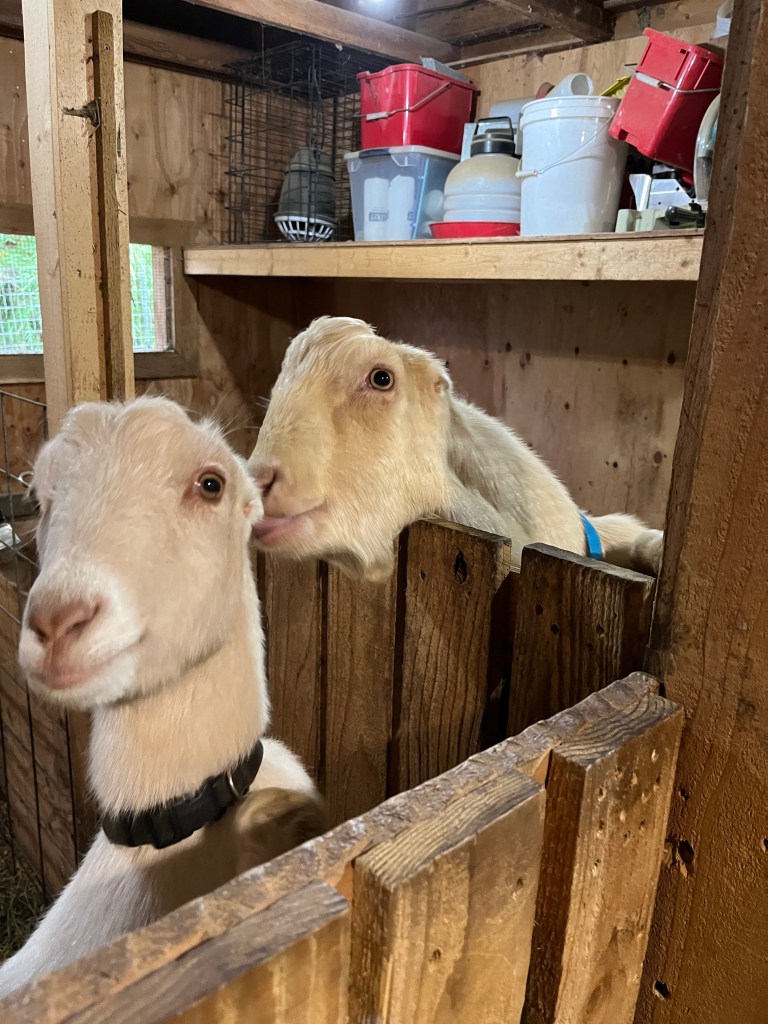
Iris, in the background is beginning to look pregnant. Hazel, foreground, though looking pregnant, sports a lovely thick winter coat – not a baby bump!

It was a busy month making lots of cold process goat milk soap in preparation for the Spring and Summer markets. I wanted to get ahead of things and the soap needs a month to cure.


Organic Mellow Goat Soap

February:

February was all about provisions for the pantry – lots of nutritious bone broth. A 16 quart Nesco roasting oven on a low setting is a perfect size for a large batch. The broth simmers away for three days then is strained, cooled, and pressure canned in pint or quart jars. There is nothing like homemade bone broth. Yum!

Soap making continued. As soap came out of the molds it was cut and placed in rows on racks to cure. After a wash and dry, new batches of soap were poured into the molds. Soap-making brings out the science geek in me!

We thought we’d trial some new seeds and had high hopes for the Sorghum. Sadly, we didn’t get them planted in time. We had an odd hot/cold/hot Spring so things were quite stunted. That being said, the Sorghum gave it’s best and did produce some seed in the Fall. We’ll try it again in 2025.

A project of some urgency got completed – the kidding enclosure! We really wanted to have this done in time so the kids had an outdoor area where they could jump and play. A nice sized pen for several young goats!

March:

We enjoyed creating a new limited edition soap named BeeBalmed Goat Milk Soap. A delicious blend of organic Bergamot, Lemon, and Lavender essential oils, this new soap was a successful sell at the markets.

BeeBalmed Soap

April:

April was a busy month. Saxony duck eggs were set in the incubator and Iris, due on the 10th, gave birth first to Willow and not long after, to Wren. Two beautiful doelings. Well done Iris! The kidding pen, completed in February was put to good use.

The first milk from a doe is called colostrum. Colostrum contains protein, fat, minerals, vitamins and immunoglobulins. It’s the vital first milk all mammals need for nourishment and their immune systems. These lucky kids were treated to five litres of it! Iris gave them the best start possible.

Willow is born. Yay, Iris!

Drying off Wren. Well done, Iris!

In their lambie-jammies!
Duck eggs!
They grow fast!
Candling a duck egg

May:

Spring! The air was filled with the scent of apple blossom. A promise of fruit to come.

Seven of twelve duck eggs hatched. Of the seven, two were female. Those aren’t great odds but are pretty typical. We kept the two females and one drake.

I adopted milking Iris this way after she tried to lean on me. A 135 pound goat leaning on you isn’t any fun. To be honest, milking this is easier on my back and arms. Works for both of us!

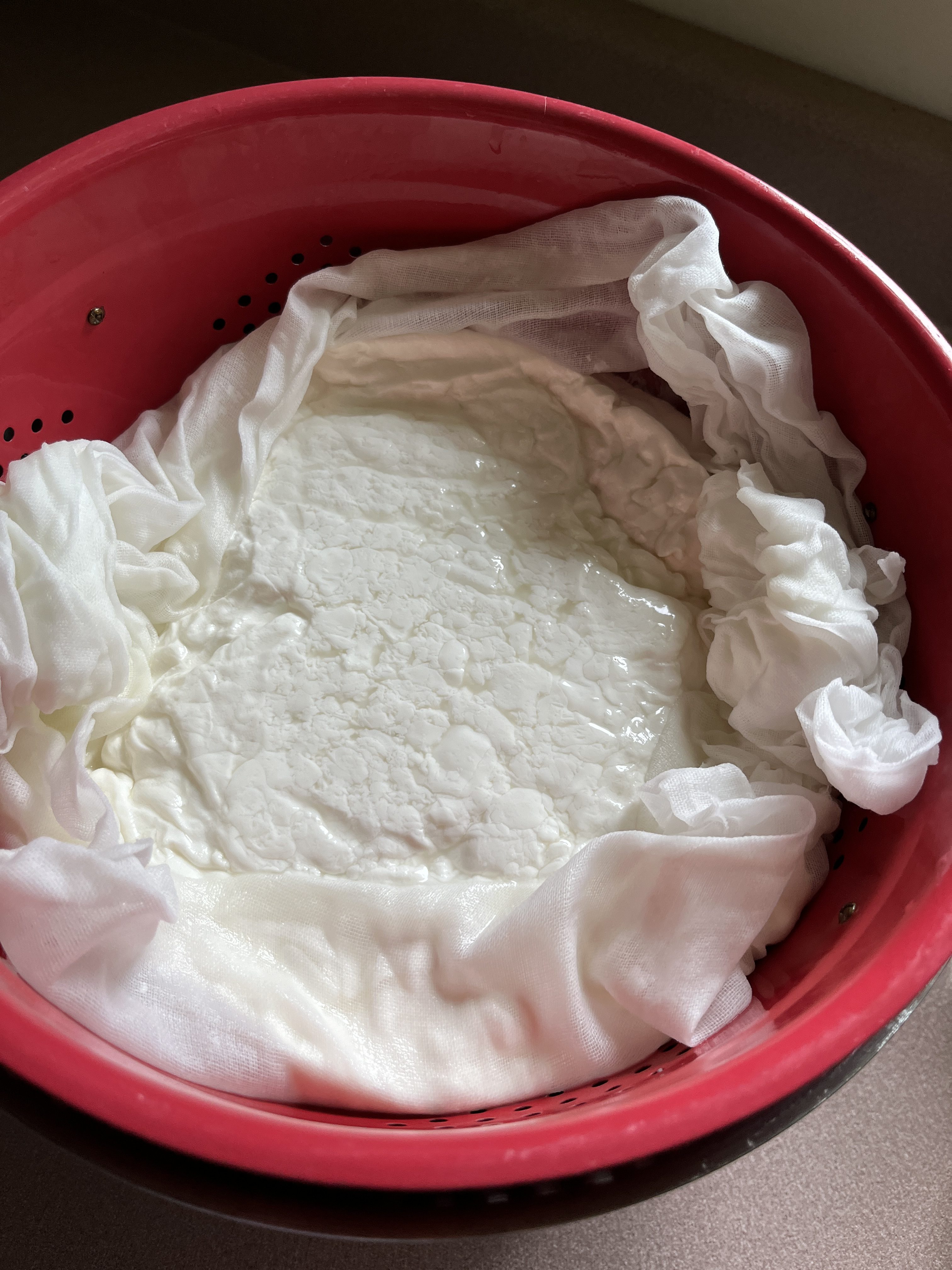
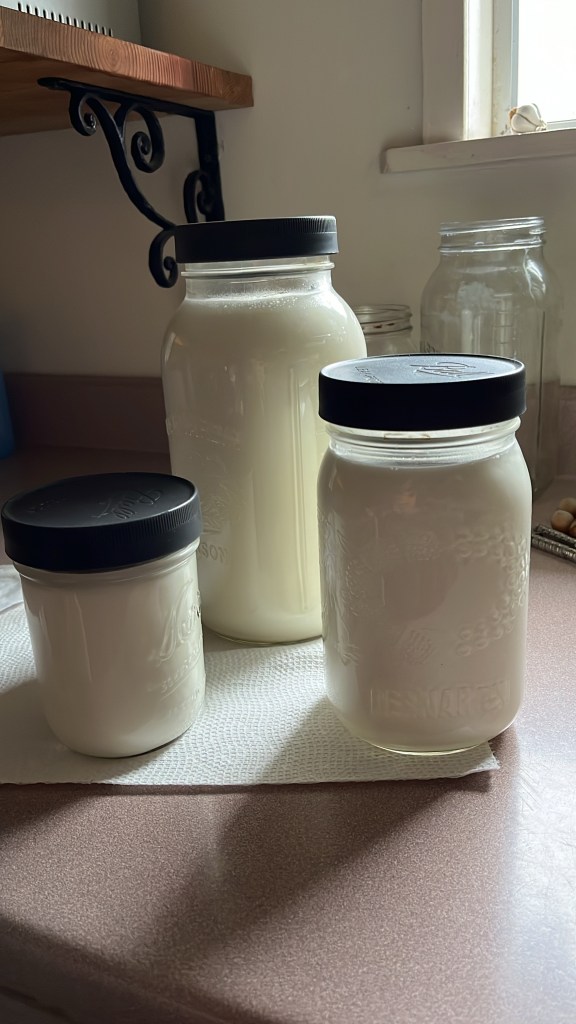
Iris produced litres and litres of milk a day. More than enough for the doelings, we began making chevre and yoghurt. So good!

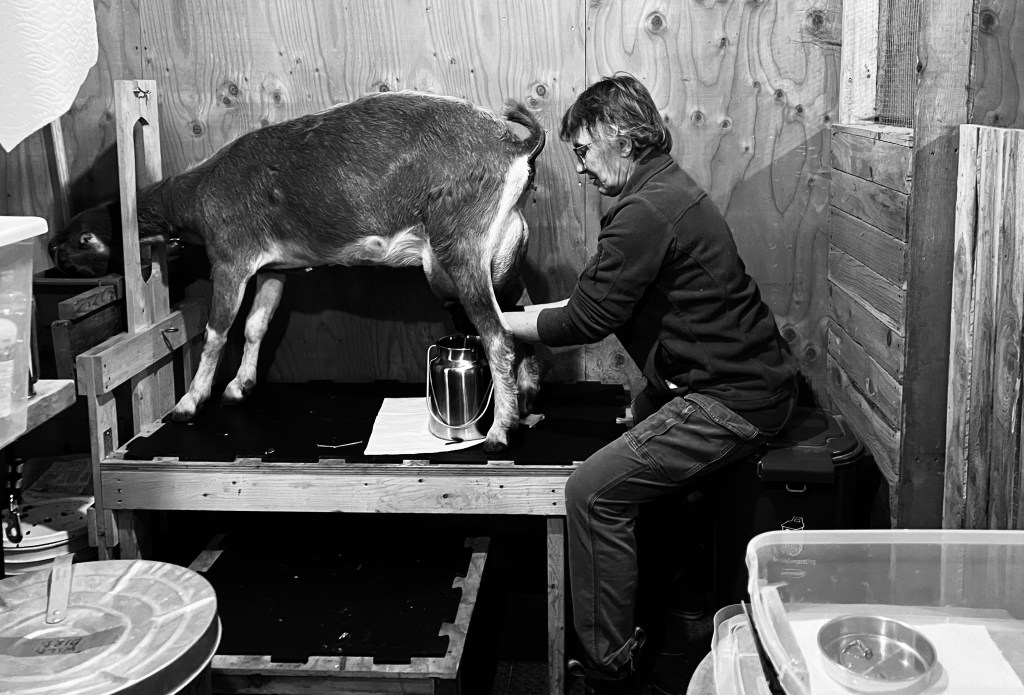
May 10th Ducklings begin to hatch!
Outside enjoying a beautiful Spring day!

June:

In June the ducklings started to go outside and explore the wider world and paddle in their first kiddie pool! Honestly, it is impossible to be cranky around a duck. They are little comedy acts and give hours of entertainment.

Iris set the bar high at 3 litres of milk twice a day – that’s a lot of milk! Milk was measured and frozen in 1 litre bags for future use in soap-making. It didn’t take long for the freezer’s to fill up and spill over into friends’ freezers!

Paul’s Himalayan Musk heritage rose gave a glorious performance. It’s hard to believe that rambling rose is only five years old. Clearly, it loves it there! The stately Verbascum outdid itself as well. Bees and bumblebees love it!

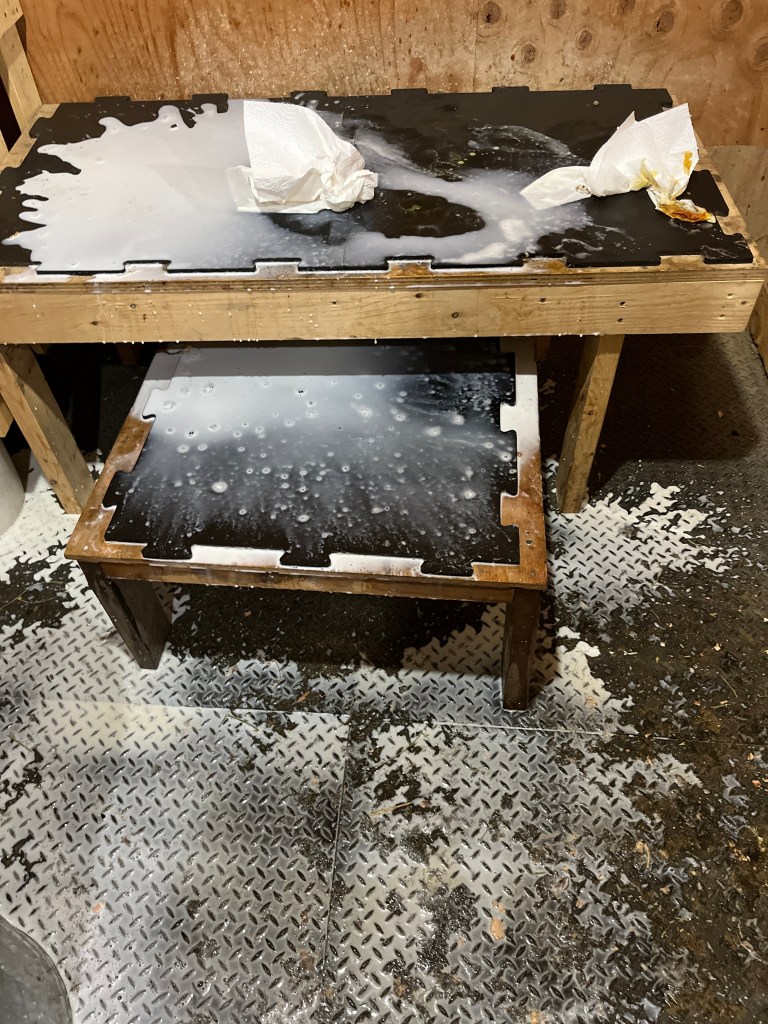
Spilled milk. Yup. It happens and it’s messy. Ooph! By the way, don’t panic. The brownish colour on the paper towel in the spilled milk photo is teat dip!

Ducklings enjoy being outside!

July:

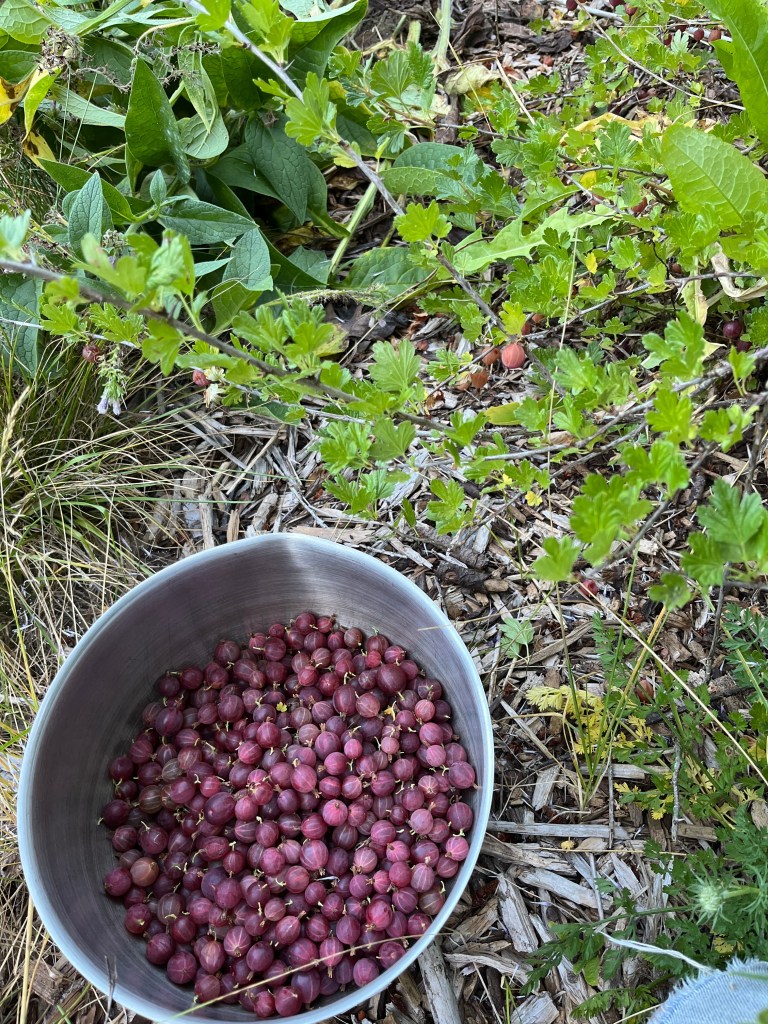
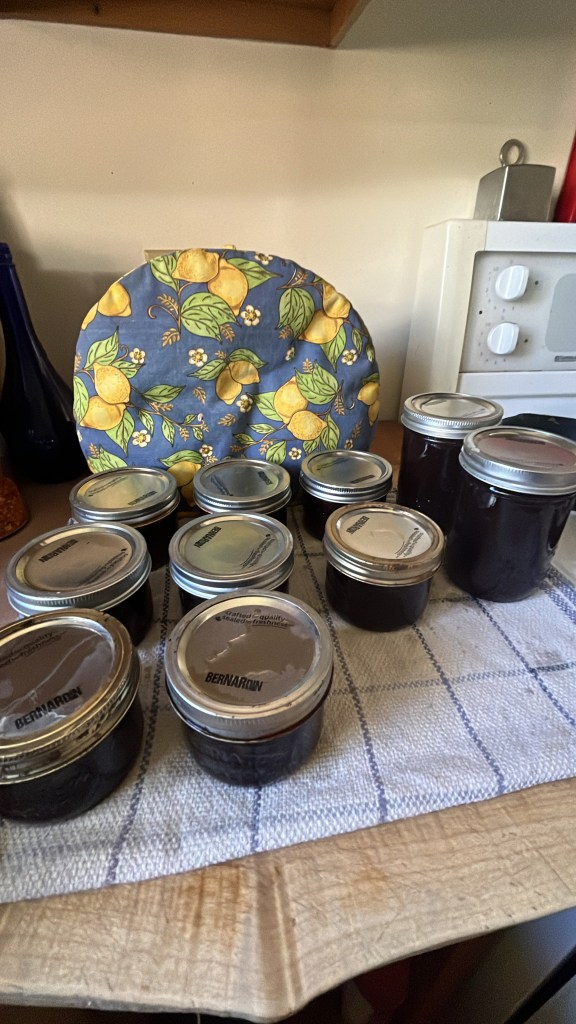
July was an absurd and busy month. Iris needed milking twice a day, the kids were growing like weeds, and gooseberries needed picking then topping and tailing before being turned into Gooseberry Bar-Le-Duc. Delicious spread on cheese or with a platter of charcuterie meats.

Flowers continued to put on a show in the gardens though with the summers getting hotter and drier, we started to focus limiting our well water to the animals and home rather than the gardens. On the wish list are water cisterns. Hopefully in a year or two.

The ducklings continue to thrive!

The three older birds.
The drakes have grey heads.

August:

There is never time off from soap-making, cutting, or getting ready for and going to markets. It’s the busiest time of the year. This bring immense joy as both locals and tourists comment on how much they enjoy the soaps.

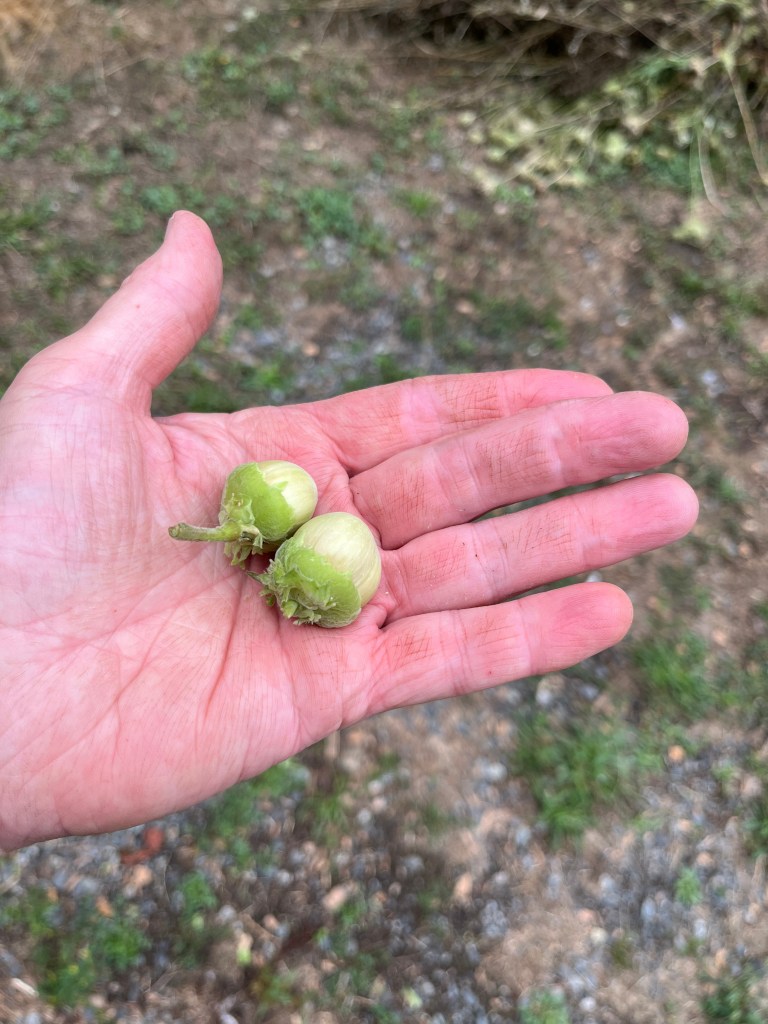
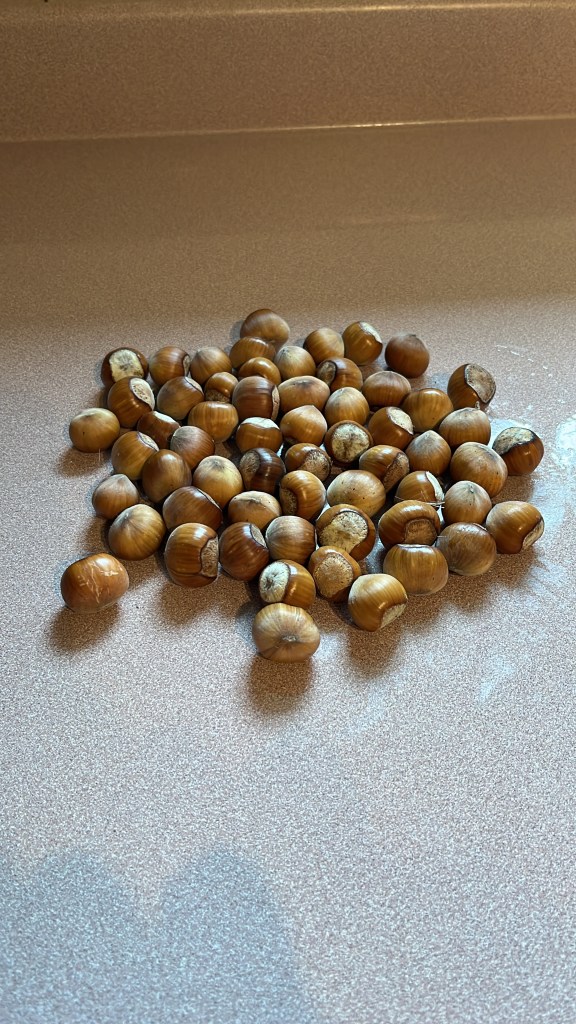
Surprise, surprise when we found a few hazelnuts on the ground. This is the first year we will get a modest crop. Stay tuned for the picture of the bumper crop in the Fall. < cough, cough>

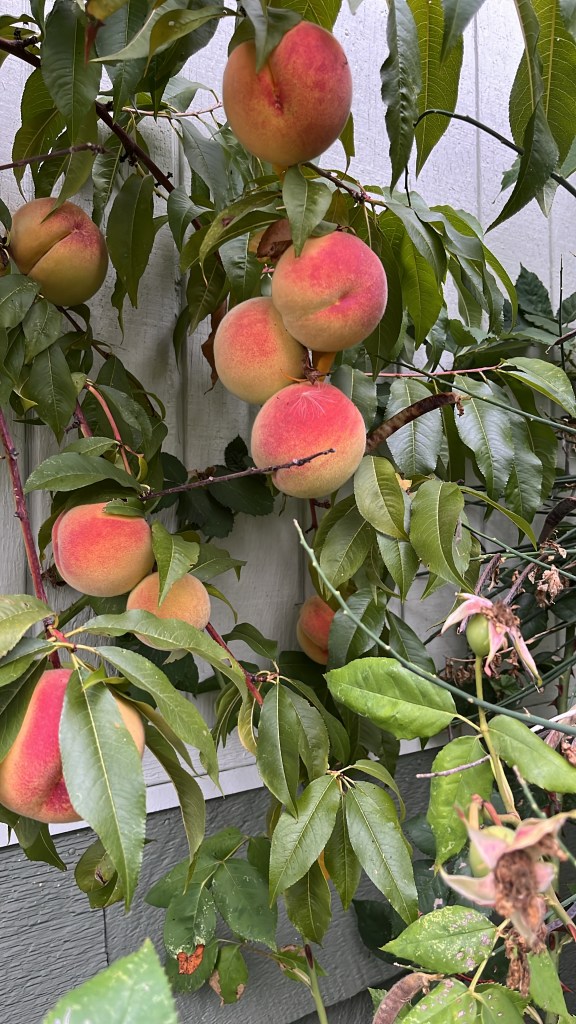
Despite having the worst case of peach leaf curl I’ve ever seen, this little peach tree produced just the right amount of exquisite peaches. None made it into canning jars. They were all eaten!

No matter the size of the farm, there are always chores to be done. Wouldn’t have it any other way!

September:

It’s hard to believe how fast ducklings turn into ducks. They’re getting their adult plumage and are quite magnificent! Saxony ducks are a great dual-purpose bird. They produce about 200 – 240 large eggs a year. I think they’re a lovely, friendly breed of duck. Quite happy to follow you around and get underfoot when you’re in the garden!

We didn’t get the bumper-crop of hazelnuts we’d hoped. The squirrels got to them first. Still, the small offering which remained was tasty!

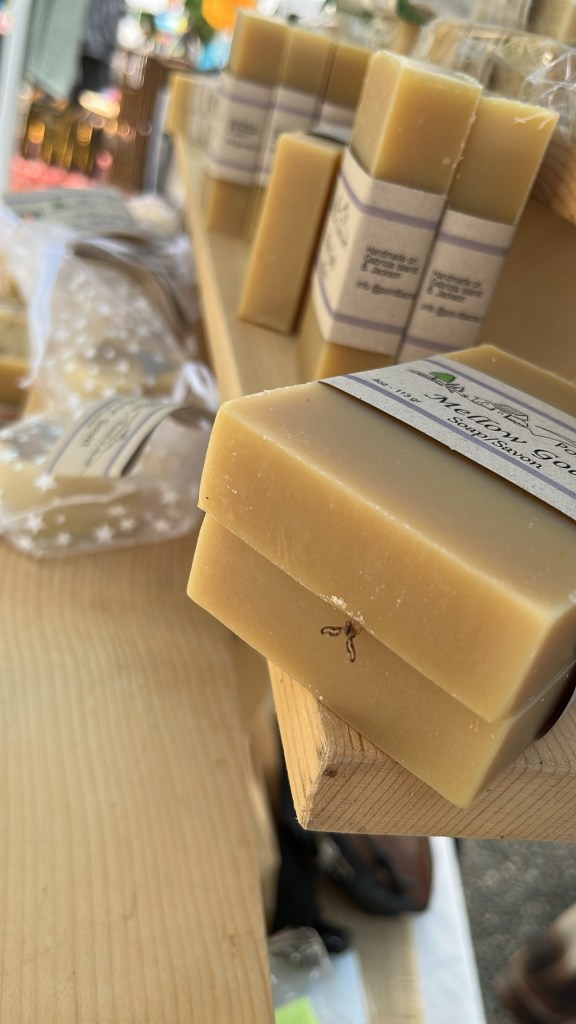
Look closely at the bar of soap in the picture and you will see the most exquisite tiny wasp sitting on the soap label. It seemed to enjoy being part of the market vibe that day. Unless I pointed it out, no-one was the wiser it was there.

The goats went on a road trip to a local fair and sanctioned goat show. Wonderful venue and show. Everyone enjoyed themselves!
Ducks in pools.

October:

October 1st and Iris continues to give 3 litres of milk twice a day. The freezers are bulging with milk and soap-making continues for the winter markets. The pace really hasn’t slowed down all year.

Friends will be boarding their three Khaki Campbell ducks and one Cayuga duck here until March. Lumber arrives for the creation of what we’re calling Fort Dux. A new secure night-time pen for the ducks. We hope they will all get along. * Spoiler alert: they do!

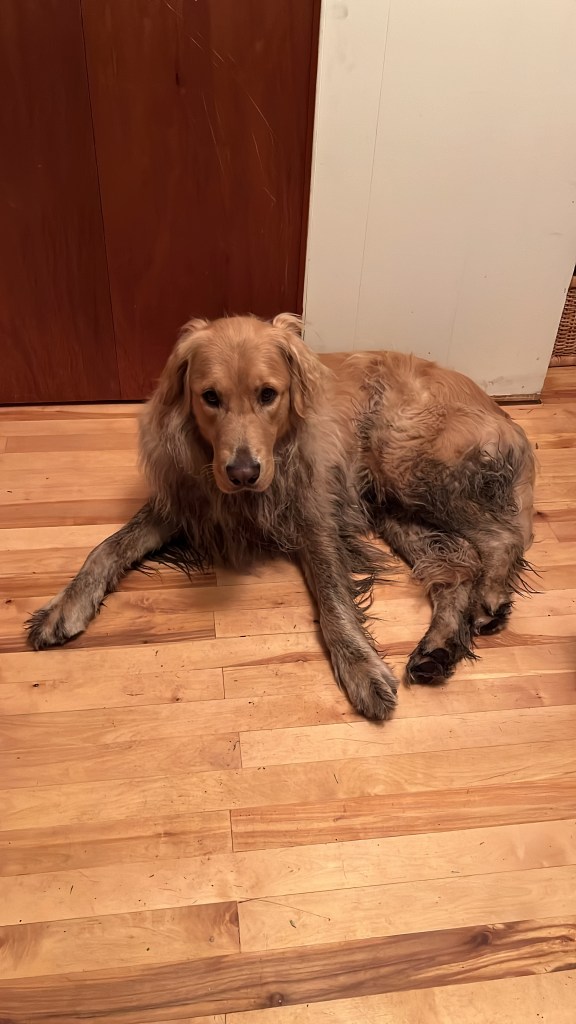
For several evenings we were given a stunning show by the aurora borealis. Breathtaking. What wasn’t breathtaking was Dawg! He enjoyed himself though!
November:

Willow and Wren are no longer the little babies. Happy and healthy they are visited at the end of the month by a sweet fellow who was quite the schmoozer!

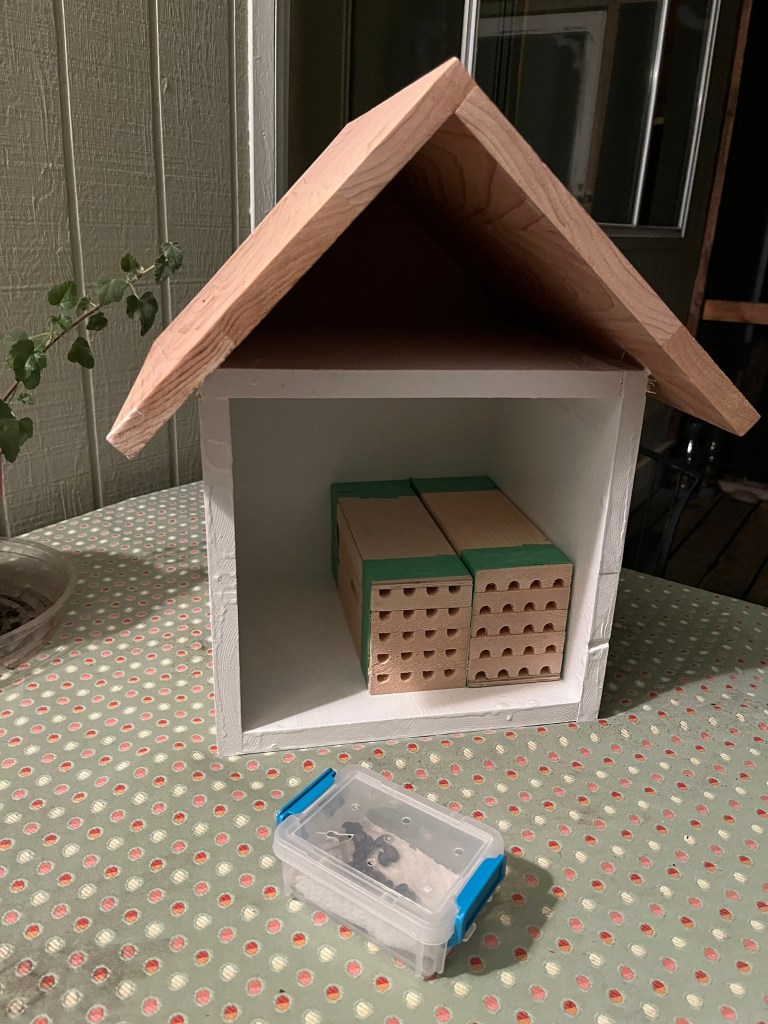
A dear friend made a mason bee house for us! With his help, we learned how to clean mason bee cocoons and save them over winter in the crisper drawer of the fridge. LOL, not for the faint of heart! Looking forward to putting them out and seeing them hatch then lay eggs in their new mansion!

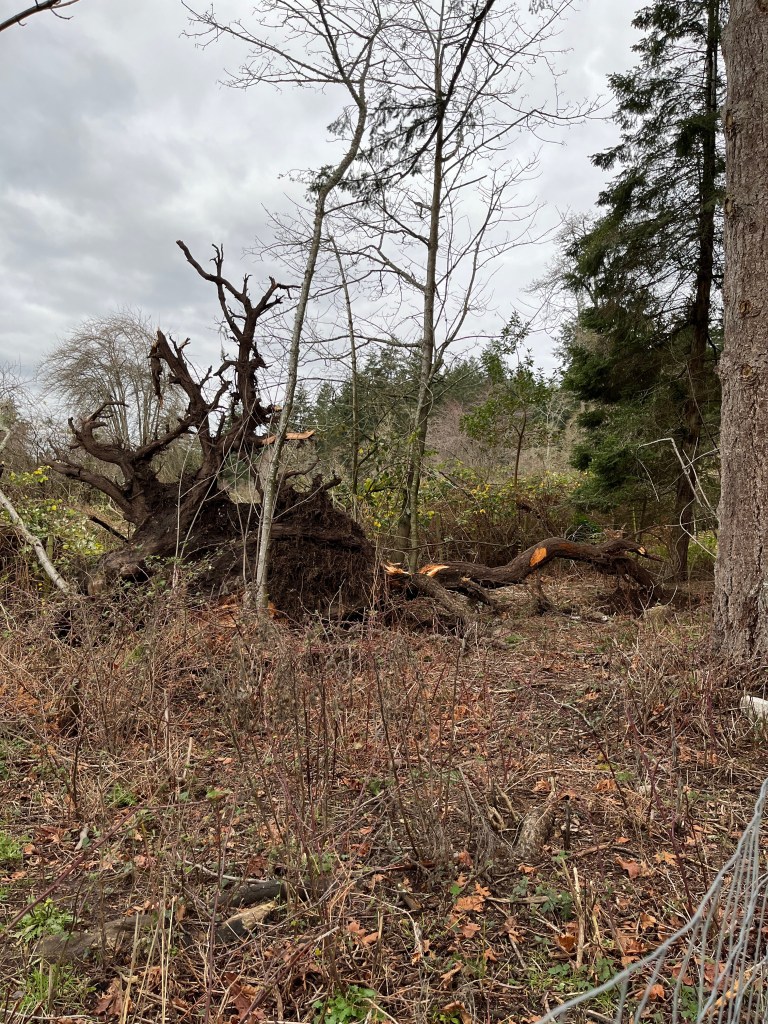
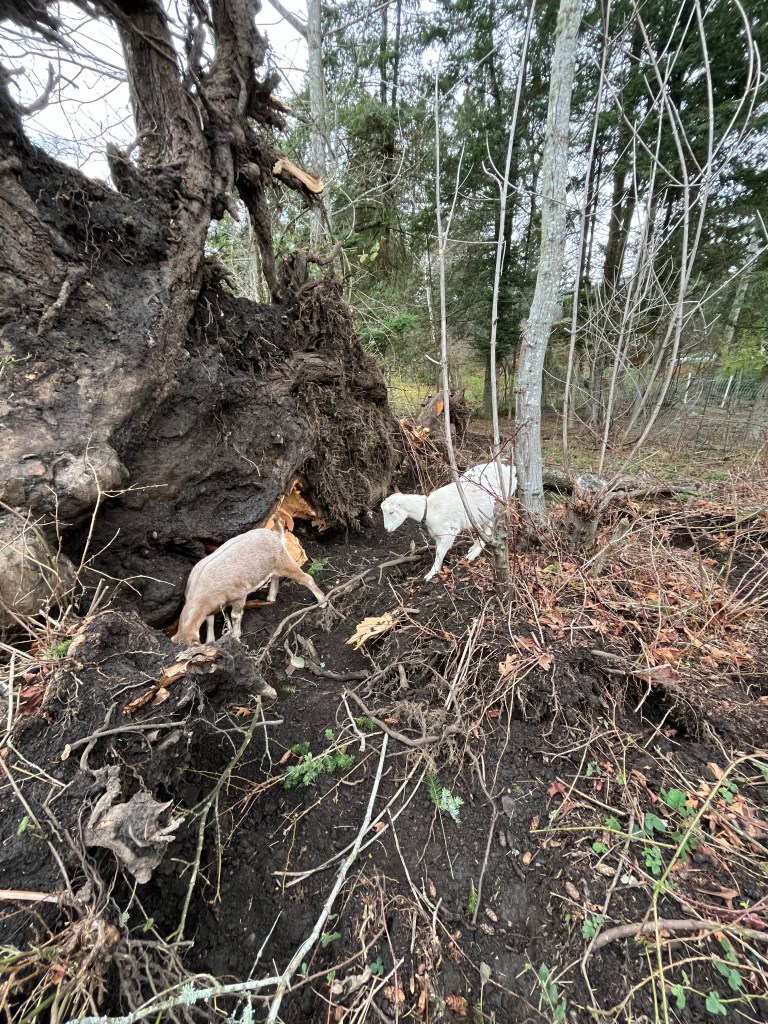
We had an extraordinary wind storm. The wind blew in completely the opposite direction and uprooted an eighty foot douglas fir. The tree came down between two fencelines with the root-ball a whisker away from the fenceline. Created quite a challenge pulling the fence back up. The goats enjoy playing in the root-ball though!

Ducks. As I always say, it’s like having toddlers underfoot. Gosh we love them! In this video, it’s time for bed.

Time for bed

December:

Well, if you’ve hung in this long, congratulations! The rains finally came and the seasonal ponds filled, giving the ducks an opportunity to do what they love to do – dibble and paddle about, and duck-dive!

Willow and Wren are thriving. We look forward to them kidding end of April!
Blissed out ducks.
Willow & Wren put on a performance.


We hope you enjoyed the recap of 2024. We hope to post more regularly this year!

See you soon!

Betty

An odd little post about Betty, er, Elizabeth.

I bought this lovely old cook-stove from an acquaintance who needed to downsize. I admit my heart fluttered and my brain, well, I vanished down the rabbit hole of childhood memories.

Memories. I grew up in a small town in the interior of British Columbia, Canada. My parents owned a summer cabin and at the end of the school year would stay until the end of August. Joyous, wondrous, childhood memories. I imagine I learned to walk about the same time I learned to swim. I digress. The stove.

Wood smoke. As a young child I remember the sound of my father waking and the grating sound as he moved the lid from the top of the cook-stove aside before striking the match to light the kindling in the firebox beneath. Crackling, then not a whooshing, but the sound of air moving as the flames picked up and drew the smoke up the chimney. He always brought my mother a cup of tea. Each morning I would climb out of bed and drink a quiet cup of tea beside him as the magic of the wood-stove took over and the cabin heated. Milky tea. I drink it to this day.

Bacon with rind on the griddle. Once removed, endless pancakes. Or, on other days, oatmeal. These things best cooked on a wood-stove. A magnificent creature, that stove. Blue and white, with a warming oven. My mother mastered baking bread and cakes in the temperamental oven and canning cherries, peaches, pears during the summer until one fated day, electricity arrived. My mother and her capabilities. The extraordinary heat from a wood-stove in summer. Some things however, never changed. The kettle boiled on the wood-stove. Breakfasts cooked on the wood-stove.

Elizabeth – Betty, I bought her. She weighs a ton. It took two strapping young guys to move her from the truck into the house. They cussed the whole way. Once in place, they admired her.

Not WETT certified, which means she can’t be connected inside the house, but she can be used outside if one day I build a summer kitchen.

For the moment, my baked bean pot, bread-bowl and old scale sit on top. I store platters and dishes in the warming oven and cast iron pans wait to be used on the cook-top. The milking equipment dries on a wonky rack.

Please, meet Betty. A beautiful old gal.


Do you have an old childhood memory like this? If so, please share!

Warmly,

Brin

Here we go again – poultry lock-down

Avian flu. It’s a thing and it’s scary. It can wipe out flocks of birds overnight.The last time the ducks and chickens at Point 6 Acre went into lock-down was June, 2022.

At the moment, there are outbreaks of Avian flu on the Lower Mainland of British Columbia. This is some distance from our little farm, but close enough to be of concern. Enough the Government of BC issued the following:

Avian Influenza in British Columbia

Since October 21st, 2023, new cases of Highly Pathogenic Avian Influenza (HPAI) have been detected at poultry premises in British Columbia. Prior to this, there had been no new cases since April 2023. Wild birds are the source of HPAI virus, and the fall wild bird migration brings increased viral contamination of the environment. The Canadian Food Inspection Agency is the lead agency for HPAI response. More information on the CFIA response can be found here: Status of ongoing avian influenza response by province – Canadian Food Inspection Agency (canada.ca)

Bird owners should look for signs of HPAI in their flocks, such as a sudden, unexplained increase in mortality. They are legally responsible to notify authorities of serious bird diseases such as bird flu. Do not take sick or dead birds off the property.

If you suspect birds you own have avian influenza:

  • During this high-risk period, it is very important that all poultry owners take actions to protect their flocks. Limit Access and Increase Hygiene:
    • Restrict access to your farm and poultry areas. Only essential workers and vehicles should be allowed.
    • Ensure all personnel and visitors disinfect their footwear and hands before entering and leaving poultry areas. Use dedicated clothing and footwear for bird areas.
  • Separate wild birds from poultry:
    • Keep poultry indoors when possible
    • Fence off poultry access to ground water sources like ponds and streams.
    • Store feed and water in sealed and covered containers.
    • Keep feeders inside the coop, and only throw out enough scratch to allow birds to clean it up.
    • Ensure feed and water is not contaminated with wild bird feces.
    • Avoid using surface water from ponds or streams for poultry.
  • Avoid Mixing Birds & Control Movements:
    • Do not move birds between different locations unless absolutely necessary.
    • Avoid introducing new birds into established flocks without a quarantine period.
  • Monitor Your Birds and Report Illness:
    • Monitor your flock daily for any signs of illness or unexpected deaths. Early detection is crucial.

For additional information, please see the attached infographic.

Effective October 20, 2023, the Chief Veterinarian has issued General Order AIV 2023-03. This order states that all persons responsible for regulated quota poultry must keep birds indoors.

Effective October 27, 2023 the Chief Veterinarian has issued General Order AIV 2023-04. This order limits the commingling of birds throughout BC and prohibits commingling within areas of the Lower Mainland.

To review recent detections of HPAI in BC and Canada, you can access the HPAI Primary Control Zone map on the CFIA’s website.

If your flock is in an active HPAI Primary Control Zone, you will need a permit to move your birds, their products, and by-products. Permits are required for both small and commercial flocks. Use CFIA’s interactive tool to find information on permits and conditions.

Ministry of Agriculture Resources

Information about Ministry of Agriculture resources is available at Avian influenza (AI) – Province of British Columbia (gov.bc.ca)

The BC Animal Health Center laboratory is providing testing for HPAI.

For all other inquiries, contact AgriServiceBC at 1-888-221-7141.

Human Health

The current strain of avian influenza (H5N1) circulating in birds in North America poses low risk to the general public and their pets, but there is potential for severe impact to humans. Influenza viruses are changeable; when strains from humans or different animal species mix and exchange genetic information, it could have serious consequences if the virus develops the ability to spread from person to person. Bird handlers, such as farmers and workers, need to be particularly vigilant because they are at higher risk of exposure to potentially infected birds.

The following precautions are recommended for farmers and workers who come into contact with sick or dead birds:

  • Wear personal protective equipment
  • The updated seasonal influenza vaccine is recommended in advance of the typical respiratory virus season for people working with live poultry.
  • Farm personnel not directly involved in culling activities should avoid exposure to infected birds, manure, or surfaces that may be contaminated with AI virus.
  • Avoid transporting the virus on footwear and pets’ feet to other locations, which could potentially infect domestic poultry, pet birds or wild birds
  • Follow instructions from local public health, who will follow up with potentially exposed workers and conduct a risk assessment.

All members of the public should stay away from sick wild birds or animals.

  • For wild mammals (e.g., foxes, mink, skunks) who are found alive and are acting strangely or showing signs of neurological illness (e.g., seizures, tremors, circling, excess salivation, inability to walk), contact the BC Wildlife Health Program at 250-751-7246 during regular business hours. After hours, please leave a message or contact your nearest wildlife rehabilitator.

I’ll take the necessary precautions. Though a flock of three ducks and five chickens seems ridiculously small to some, they are part of the farm and livelihood. I receive $1 per duck egg during the laying season. This small income pays for the poultry feed. We all know, every bit helps in these unpredictable times. And, the chicken eggs feed us.

What about you? Is Avian flu an issue where you live? Do you practice biosecurity?

Warmly,

Brin

Compostable packaging – that’s great news!

I’m excited to share Point 6 Acre has compostable packaging for our soap. Many people assume compostable and biodegradable are the same thing. They’re not! I purchase my packaging from Elevate Packaging. I’m going to quote them and post a link.

“Both terms describe a natural process for recycling organic waste. All compostable products are biodegradable, but biodegradable products are not always compostable.

The main difference is that compostable products have undergone strict testing to ensure that they break down within a specific time frame and do not release anything harmful into the environment. Biodegradable products have no such requirements, meaning that they may not be as beneficial as they first appear.

Compostable packaging will:

  • Break down within the time needed by the composting environment
  • Not release harmful toxins as it decomposes
  • Create healthy compost that enriches the soil

Compostable packaging must adhere to strict standards and has been rigorously tested. Packaging labeled only as biodegradable cannot be composted and must therefore be sent to a landfill.”

To read more, click HERE.